Canarygrass
(Phalaris)
By Bruce Homer-Smith
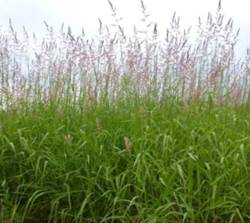
Phalaris is in the Oat Tribe.
Tiny spikelets are generally clustered in a tight
cylinder at the top of stems.
|
(Phalaris aquatica) Photo by Alf Fengler |
(Phalaris lemmonii) Photo by Zoya Akulova-Barlow |
|
(Phalaris paradoxa) Photo by Toni Corelli |
(Phalaris californica) Photo by Toni Corelli |
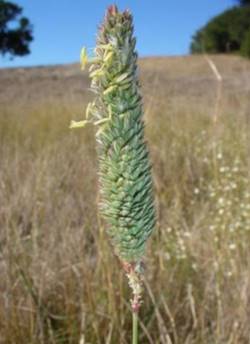
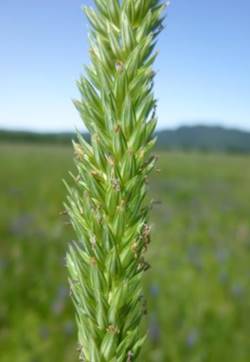


Spikelets
appear to be arranged in a spike. However, they do have short branches you
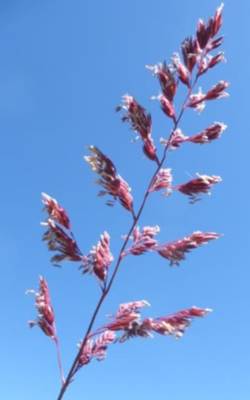
can’t see because the inflorescence is
so dense. Some Canary Grasses open up at
maturity, revealing their branches.
|
Photo by Bruce Homer-Smith |
Photo by Zoya Akulova-Barlow |

It’s all about the glumes
Shiny,
wide, flat glumes completely hide a single
fertile floret.
|
Photo by Steve Matson |
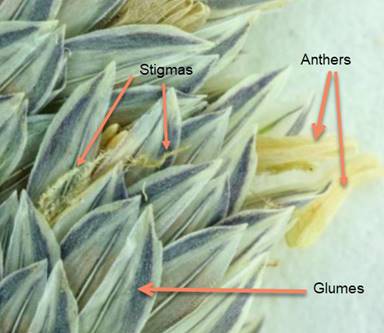
The glumes
have flat edges, called wings. Their
flat surfaces reflect light, making the spikelets look shiny.
In the
picture above, you can see anthers and stigmas stick out beyond the glume to release and receive
pollen on the wind.
Leaves are substantial
Canarygrass
has big, flat leaves, 6 – 20” long.
|
Photo by Zoya Akulova-Barlow |
Photo by Zoya Akulova-Barlow |

California
has 12 species of Phalaris. Phalaris is similar to both Latin and
Greek words for “white spot”, which refers to the shiny spikelets in this
genus. Run your fingers over the flat
spikelets and feel how smooth they are.
|
|
Corrections/Comments: bruce@PlantID.net Copyright: https://PlantID.net/Contributors.aspx |